
Steam Shrink Tunnel Machines for Shrink Sleeve Applications
Achieve smooth, wrinkle-free shrink sleeve labeling with Tengyi’s industrial steam shrink tunnel machine solutions.
Our steam shrink tunnel systems are specifically designed for shrink sleeve applications across beverage, dairy, cosmetic, edible oil, and household packaging industries. As a professional manufacturer of industrial steam tunnel equipment, Tengyi provides customized solutions for customers seeking reliable, high-quality sleeve shrinking performance.
Key Benefits
- Suitable for round bottles, irregular bottles, and thin-wall containers.
- Supports custom engineering solutions.
- Annual delivery volume approximately 1,000 units.
- More than 10,000 customers served.
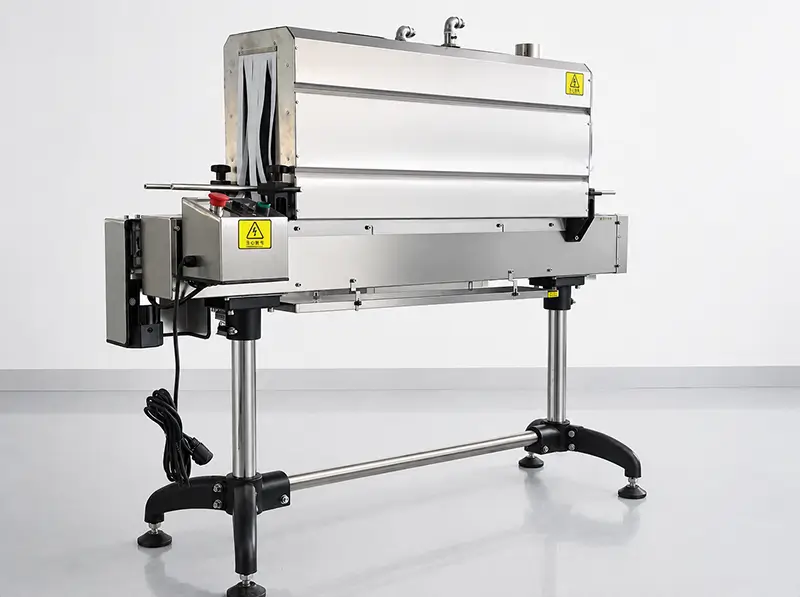
Industrial Steam Shrink Tunnel Solutions
Tengyi manufactures industrial-grade steam shrink tunnel machine solutions for shrink sleeve labeling production lines.
Our equipment is designed to meet the requirements of manufacturers seeking stable operation, flexible adjustment, and excellent sleeve appearance.
Each steam tunnel machine can be configured according to project requirements and available steam infrastructure.
For customers with specialized production environments, customized steam shrink tunnels can be supplied based on container shape and production requirements.
Unlike conventional shrinking technologies, a shrink steam tunnel provides uniform steam exposure around the sleeve surface, helping achieve smooth and consistent shrink results.
Typical Industries
• Beverage packaging
• Dairy products
• Cosmetic packaging
• Household products
• Edible oil packaging
Competitive Advantages
• Supports non-standard customization
• Proven export experience
• Extensive manufacturing experience
• Specialized shrink equipment manufacturing focus
How Steam Shrink Tunnels Work
A steam heat shrink tunnel applies controlled steam directly to shrink sleeve labels while minimizing heat impact on the container itself.
Working Process
Steam Generation
Water is heated to generate steam. A steam generator for shrink tunnel applications may be configured as an integrated system or supplied from an external steam source.
Steam Distribution
Steam is transferred through the internal distribution system and directed toward adjustable steam nozzle bars.
Shrinking Process
As containers travel through the steam heat tunnel, steam is evenly sprayed onto the shrink sleeve surface. The label shrinks and conforms to the container shape.
Condensate Collection
Steam condenses after heat transfer and is discharged through a gravity drainage system.
Finished Product Output
Containers exit the tunnel with finished shrink sleeves ready for downstream packaging operations.
Steam Requirements
| Item | Value |
|---|---|
| Working Pressure | 0.1-0.7 MPa |
| Recommended Pressure | 0.2-0.4 MPa |
| Steam Source | Internal or External |
| Condensate Removal | Natural Gravity Drainage |
Engineering Design Features
Why Use Multiple Independent Steam Rods?
- Different areas of a shrink sleeve require different steam intensity.
- Independent steam rods allow targeted steam delivery.
- Each steam rod can be adjusted independently.
- Independent adjustment improves shrinking consistency across complex container geometries.
- Supports non-uniform steam distribution for better label appearance.
Why Use Bottom Pre-Shrink?
- Bottom pre-shrink fixes the sleeve position before upper-body shrinking.
- Helps prevent sleeve movement during shrinking.
- Improves label positioning accuracy.
- Reduces wrinkles and trapped air.
Why Use a 1.8 m Extended Tunnel?
- Longer tunnel length provides sufficient shrinking time.
- Supports high-speed sleeve labeling applications.
- Allows progressive shrinking across multiple stages.
Why Use a Steam Manifold Design?
- Stabilizes steam pressure.
- Improves steam distribution consistency.
- Supports independent steam rod control.
- Reduces pressure fluctuations across the shrinking area.
Why Use Steam for Shrink Sleeve Applications?
A steam tunnel for shrink sleeves offers significant advantages compared with hot air shrinking methods.
Manufacturers choose steam tunnels for shrink sleeves because steam delivers heat evenly around the entire container surface, helping eliminate common shrink sleeve quality issues.
Better Performance on Irregular Bottles
A steam shrink sleeve tunnel is especially suitable for:
- Irregular bottles
- Thin-wall bottles
- Contoured containers
These bottle types are applications where steam technology performs particularly well.
Reduced Risk of Bottle Deformation
Compared with hot air systems, a shrink sleeve steam tunnel primarily transfers energy through steam condensation rather than exposing the entire bottle surface to high-temperature airflow.
This helps reduce deformation risk.
Improved Sleeve Appearance
Adjustable nozzle positioning allows operators to optimize steam coverage and minimize:
- Wrinkling
- Uneven shrinkage
- Poor conformity
Key Applications: Bottles, Containers & Shrink Labels
Beverage & Cosmetic Bottle Packaging
A bottle steam shrink tunnel is widely used across beverage, cosmetic, dairy, and household product industries.
Typical applications:
- Bottled water
- Juice products
- Dairy beverages
- Cosmetic containers
- Household products
Full-Body Shrink Sleeve Labeling
A steam shrink sleeve machine provides consistent full-body sleeve shrinking for branded packaging applications.
Many manufacturers deploy shrink sleeve steam tunnels on packaging lines requiring premium product appearance and consistent sleeve conformity.
The shrink label steam tunnel process enables labels to conform smoothly around bottle curves and contours.
Tamper-Evident Bands & Cap Sealing
In addition to bottle sleeves, a shrink sleeve steam tunnel machine can be used for tamper-evident band shrinking and cap sealing applications.
Application examples:
- Neck bands
- Cap seals
Metal Can Applications
Steam shrink technology can be applied to aluminum cans.
Steam is considered one of the most effective shrinking methods for metal containers.
Suitable for shrink sleeve labeling on aluminum cans and similar metal packaging.
Our Steam Shrink Tunnel Models
Tengyi provides multiple steam shrink tunnel configurations to support different production requirements, facility conditions, and automation levels.

Compact Steam Shrink Tunnel Machine
Best For: Pilot production and small-batch applications.


Steam Shrink Tunnel Comparison
| Feature | F1015 | T2020 | T1030 |
|---|---|---|---|
| Positioning | Compact / Entry-Level | All-in-One Solution | High-Speed Production |
| Steam Supply | External | Integrated | External |
| Production Scale | Small Batch | Medium Volume | High Volume |
| Best For | Pilot Production | Independent Operation | Sleeve Labeling Lines |
| Learn More | F1015 Page | T2020 Page | T1030 Page |
Steam vs. Hot Air Shrink Tunnels
Many buyers compare steam vs electric shrink tunnel systems for food packaging when evaluating shrink sleeve applications.
While both technologies are used for heat shrinking, steam tunnels are generally preferred for shrink sleeve labeling because they provide more uniform heat distribution and better conformity on complex container shapes.
| Comparison Item | Steam Shrink Tunnel | Hot Air Shrink Tunnel |
|---|---|---|
| Heat Transfer Method | Steam Condensation | Heated Air |
| Performance on Irregular Bottles | Better | Lower |
| Sleeve Uniformity | Better | Application Dependent |
| Bottle Deformation Risk | Lower | Higher |
According to our experience, steam heating primarily affects the shrink sleeve rather than the bottle itself.
This helps reduce deformation risks while delivering a more consistent shrink result, particularly on thin-wall and irregular containers.
For applications that do not require steam-based shrinking, explore our complete shrink tunnel solutions to compare alternative heat shrink technologies.
How to Choose a Steam Shrink Tunnel
Choosing the best steam tunnels for shrink sleeves depends on several project factors.
Bottle Geometry
Round bottles / Flat bottles / Irregular bottles / Thin-wall containers
Shrink Sleeve Material
Confirmed Materials: PVC / PET
Required Production Speed
Typical production capacities range from several hundred to several thousand bottles per minute, depending on bottle size, sleeve material, and production line configuration.
Available Steam Source
Existing factory steam supply / External steam source / Integrated steam generator
Commercial & Pricing Information
Choosing the best steam tunnels for shrink sleeves depends on several project factors.
What Affects Steam Shrink Tunnel Price?
Factors affecting steam shrink tunnel price include: Tunnel dimensions / Steam system configuration / Production capacity / Automation level / Custom engineering requirements.
Customers searching for a steam shrink tunnel for sale should prepare project specifications before requesting a quotation.
The final steam shrinking tunnel price depends entirely on application requirements and customization scope.
For buyers comparing shrink sleeve steam tunnel machine price options, the following information is generally required: Container dimensions / Sleeve specifications / Production speed / Steam source availability.
While some buyers search for a steam shrink tunnel buy online, most industrial projects require engineering evaluation before final configuration and quotation.
Frequently Asked Questions
What steam pressure is recommended?
Recommended operating pressure is 0.2-0.4 MPa, with an allowable range of 0.1-0.7 MPa.
Can I use an existing factory steam supply?
Yes. The equipment supports both external steam sources and integrated steam generation systems.
Why choose a steam heat shrink tunnel instead of a hot air tunnel?
Steam provides more uniform label shrinking and helps reduce the risk of bottle deformation.
What is the most common steam tunnel application?
The most common steam tunnel application is shrink sleeve labeling for beverage, cosmetic, dairy, edible oil, and household product containers.
Can irregular bottles be processed?
Yes. Adjustable steam nozzle positioning enables processing of irregular and thin-wall containers.
How are wrinkles reduced?
Wrinkles are typically addressed by adjusting steam volume and nozzle position to achieve proper heat distribution.
How is condensate handled?
Condensate water is discharged through a gravity drainage system connected to plant drainage infrastructure.
What utilities are required?
Water / Electricity / Compressed air (approximately 0.4 MPa) / Steam source
Why does steam perform better on irregular bottle shapes?
Independent steam adjustment and targeted steam distribution allow more uniform shrinking across complex bottle geometries. Adjustable steam rods also help optimize steam delivery for specific container profiles.
Can steam shrink tunnels be used for metal cans?
Yes. Steam shrink technology can be applied to aluminum cans and other metal containers requiring shrink sleeve labeling. Steam provides efficient and consistent shrinking performance on metal surfaces.