
Heat Tunnel for Bottles: The Complete Selection Guide for Shrink Sleeve & Bottle Bundling
Selecting the correct heat tunnel for bottles is more than a simple machine purchase—it is a critical process decision that determines your brand’s shelf appeal and production stability. The wrong system can lead to PET bottle deformation, wrinkled labels, or latent rust on metal containers.
- 11+ Years Factory Experience
- 300+ Deployments in China
Which tunnel is right?
Let our custom logic instantly identify your recommended machine setup.
Please select material and film above to reveal recommendations.
What Is a Heat Tunnel for Bottles?
A bottle heat tunnel is a highly specialized heating system designed to shrink labels or protective films tightly around containers after they have been applied. Unlike standard shrink ovens, these tunnels are engineered for continuous production lines where stability, consistent temperature, and uniform heat transfer are non-negotiable.
Are you unsure whether steam or electric heating is better? Read our detailed comparison of Steam Heat Tunnel vs Hot Air Tunnel.
360-degree high-impact branding on custom bottle designs, contours, and complex curvatures.
Securing standard caps, closures, and dispenser pumps with safety seals for consumer protection.
Creating structurally sound 6-packs, 12-packs, or promotional bundle packs using heavy-duty PE films.
Material Compatibility
What Types of Bottles Use Heat Tunnels?
Container materials absorb and conduct heat differently. Choosing the wrong thermodynamic match leads to structural failures. Learn how we address each container class below.
Lightweight empty PET bottles soften at relatively low temperatures (around 70°C). High-heat electric ovens will trigger “shoulder sag” or base warping.
Recommended:
Terowongan Panas Uap
Glass acts as a massive heat sink. It remains highly stable under temperatures, but requires prolonged exposure or quick high-efficiency heat to shrink labels completely.
Recommended:
Steam OR Hot Air (High Capacity)
Metal containers quickly conduct heat, and using steam runs the critical risk of trapping condensation inside or beneath the label, leading to structural rusting or degradation.
Recommended:
Dry Hot Air Tunnel
Hourglass shapes, tapered necks, and steep angles exhibit pockets of uneven shrinkage when subjected to simple unidirectional forced-draft electric air tunnels.
Recommended:
Dry Hot Air Tunnel
Engineering Protocol
The Film → Material → Speed Decision Model
Our packaging engineers configure automatic bottle heat tunnels using a highly standardized three-step decision framework to achieve 100% operational success.
PETG, PVC, and OPS sleeves require steam heat tunnels for delicate shrinkage. PE and POF bundling films demand dry high-intensity air tunnels.
Is the bottle empty or filled with cold liquids? We adjust thermodynamic profiles to counter liquid heat-sink absorption or empty structural sagging.
Select low capacity (up to 50 Bottles Per Minute), standard industrial scale (100 BPM), or advanced synchronous multi-stage systems (150+ BPM).
Industrial Technology Breakdown
| Decision Factor | Terowongan Penyusutan Uap | Hot Air / Electric Tunnel |
|---|---|---|
| PETG Sleeve Labels | ✓ Best Choice (Flawless) | △ Risk of wrinkles / dry spots |
| PE Film Bundling | ✕ Highly unrecommended | ✓ Best Choice (Dry thermal) |
| PET Bottle Integrity | ✓ Excellent (Lower 100°C temp) | ✕ High deformation risk |
| Metal Container Anti-Rust | ✕ Moisture risk beneath label | ✓ Excellent (Moisture-free) |
| Complex/Irregular Shapes | ✓ Excellent 360° dispersion | ✕ Poor air angle distribution |
| High Output Lines | 100 - 250 BPM | Max 100 BPM |
heat tunnels recommendation
Recommended Bottle Heat Tunnel Solutions
After determining your film type, container material and production speed, our engineers typically recommend one of the following configurations.
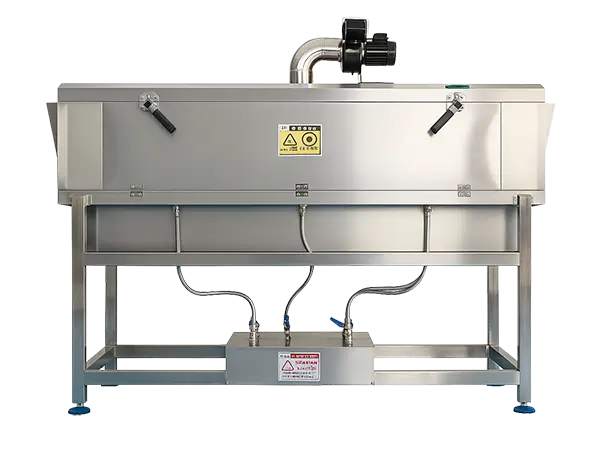
Terowongan Panas Uap
Specifically built to handle the highest-speed lines without sacrificing label quality. Distributes safe, precise low-temperature water vapour around complex curvatures for tight, complete labels.
150+ BPM
304 Stainless Steel
6-10 Zone Independent
PETG / PVC / OPS
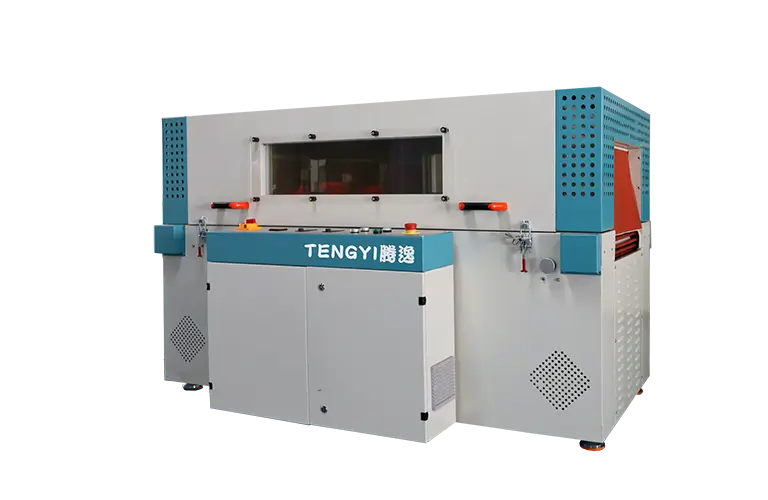
TY-5030 Hot Air Tunnel
Ideal for industrial PE multipacks, heavy duty cosmetic box packaging, and moisture-sensitive iron tins. Eliminates rust threats and condensation build-ups entirely using controlled thermal cross-drafts.
15kW - 24kW Adjustable
Max 30 kg Loading
10cm Fiberglass insulation
PE / POF / Thick PVC
Explore more about our steam dan hot air tunnel machines for bottles ->>
Explore complete mesin pembungkus menyusut untuk botol->>
⚡ Zero Risk Trial
Eliminate Guesswork: Send Us Your Bottle for a Free Trial Run
Final shrink aesthetics depend on subtle variables—container thermal mass, film thickness, print inks, and contour steepness. Avoid the expense of purchasing incorrect machinery.
- You send us your bottles (with labels or film samples)
- Our senior packaging engineers configure and run tests
- We send you a full diagnostic report & HD result videos
Submit your bottle and speed requirements to get factory-direct pricing within 6 hours.
Bottle Heat Tunnel FAQs
Find authoritative answers to technical processing, thermodynamic limitations, and operating profiles.
What is the best heat tunnel for PET bottles?
Steam heat tunnels are generally considered the preferred solution for shrink-sleeve labeling on PET bottles. PET containers are more sensitive to heat than glass or metal packaging and may deform if exposed to excessive temperatures for prolonged periods. Steam provides fast, uniform heat transfer, allowing shrink sleeves to conform accurately to bottle contours while minimizing the risk of bottle distortion. This makes steam tunnels especially suitable for full-body and complex-shaped PET bottle applications.
Can a steam tunnel shrink PE (Polyethylene) film?
No. PE shrink film typically requires shrink temperatures above 150°C to achieve proper shrink performance, especially in beverage bundle and multipack packaging applications. Standard steam tunnels operate at approximately 100°C and cannot generate the high-temperature dry heat needed for PE film shrinkage. For PE packaging, hot-air shrink tunnels are the industry-standard solution.
Steam vs. Hot Air: Which is better for bottle packaging?
The best choice depends on the shrink film, container material, and package design. Steam tunnels are typically preferred for PETG, PVC, and OPS shrink-sleeve labels, especially on contoured or irregularly shaped bottles where uniform 360° shrink performance is critical. Hot-air tunnels are generally preferred for PE bundle packaging and metal containers, where higher shrink temperatures or moisture-free processing are required.
Can one tunnel run different bottle sizes and shapes?
Yes. Our shrink tunnels are designed to accommodate a wide range of bottle sizes and container profiles. On the TY-W300, steam nozzles and manifold assemblies can be independently adjusted both horizontally and vertically to optimize heat distribution for different bottle contours. Adjustable guide rails also allow the conveyor system to handle containers with varying diameters and heights, reducing changeover complexity between product runs.
Do I need an external steam generator for steam tunnels?
In most production setups, an external steam generator is required to provide a stable and controllable steam supply for the tunnel. Alternatively, some factories may use a centralized plant steam system if available. A dedicated steam generator helps ensure consistent steam pressure and output during continuous operation, which is critical for stable shrink performance.
We also provide matched steam generator systems with automatic water softening and integrated control designed to work with our steam tunnel lines.
What temperature is used in a bottle shrink tunnel?
The operating temperature depends on the tunnel type and shrink film material. Steam shrink tunnels typically operate with saturated steam at approximately 90°C–110°C, providing uniform heat transfer ideal for PETG, PVC, and OPS shrink sleeve applications. Hot-air shrink tunnels for PE bundle packaging generally operate at higher temperatures, around 140°C–180°C or above, combined with forced air circulation to achieve proper shrink performance on thicker films.
Can empty PET bottles deform during high-speed labeling?
Yes, deformation can occur when excessive dry hot-air is applied, especially in high-speed shrink labeling lines. Empty PET bottles are more sensitive because they lack internal support from liquid content and may soften or distort under prolonged heat exposure.
Steam tunnels, such as the TY-W300, help minimize this risk by providing rapid and uniform heat transfer, allowing shrink sleeves to conform to the bottle surface with less overall heat exposure to the container body, thereby reducing deformation risk during high-speed production.
Can heat tunnels easily handle tamper-evident neck bands?
Yes, in most standard applications. Tamper-evident bands are typically applied around bottle caps and neck areas. Steam shrink tunnels use adjustable nozzle and manifold configurations to optimize heat distribution toward the upper section of the container, allowing effective shrinking of neck bands while minimizing unnecessary heat exposure to the body of the bottle.
Can the tunnel fully integrate with high-speed filling lines?
Yes, our tunnel systems are designed to fit right into automated production lines.
They feature variable-speed conveyors with POM modular belts to keep products moving smoothly across different line speeds.
You can easily connect the system to upstream automatic sleeve applicators and downstream packaging equipment, like carton packers or palletizers.
Everything connects through standard PLC or I/O control signals, depending on your exact setup.
Do you provide global support or on-site commissioning?
Yes, Tengyi provides global installation and commissioning support depending on project requirements. Our services include remote technical diagnostics, Factory Acceptance Test (FAT) before shipment, and on-site commissioning assistance when required. We also provide standard and application-specific operation manuals and training materials based on customer production configurations.
Why Global Beverage and Cosmetic Brands Choose Tengyi
Every single layout is configured from client-specific geometry and speed inputs.