
Choosing between a fully automatic sleeve wrapper and a semi automatic sleeve wrapper depends on your production capacity, level of automation, product consistency, and long-term labor costs.
If your production requires flexible operation and frequent product changes, a semi-automatic sleeve wrapper is usually the better choice. For high-volume continuous packaging lines, a fully automatic sleeve wrapper delivers higher efficiency and lower labor dependency.
This comparison outlines the differences between the two systems based on automation level, production scale, labor requirements, line integration, and packaging applications.
Key Differences Between Semi-Automatic and Fully Automatic Sleeve Wrappers
| Item | Semi-Automatic | Fully Automatic |
| Feeding | Manual | Automatic |
| Automation Level | Partial | Full |
| Production Volume | Small batch | Mass production |
| Flexibility | High | Best for standardized products |
| Labor Requirement | Higher | Lower |
| Initial Investment | Lower | Higher |
| Packaging Speed | 8-10 packs/min | 5-8 bundles/min |
| Best Use Case | Flexible / mixed production | High-volume continuous production |
Why Does Fully Automatic Seem “Slower”?
5-8 bundles per minute looks slower than 8-10 packs.
Here is the truth.
Automatic machines take time to carefully group and align products.
Semi-auto machines rely on humans pushing products in fast bursts.
But humans get tired during an 8-hour shift.
Automatic machines run like marathon runners.
They deliver stable, non-stop output all day with zero labor.
Always measure daily volume, not a one-minute sprint.
How to Choose the Right Sleeve Wrapper
Based on Production Output
If your packaging line runs below 10 packs per minute and frequently changes product formats, a semi-automatic sleeve wrapper is usually more cost-effective.
For continuous beverage or bottled water production above 3,000 bottles per hour, a fully automatic sleeve wrapper provides better long-term efficiency and lower labor costs.
Based on Product Variety
Semi-automatic sleeve wrappers are more flexible for mixed product sizes, promotional bundles, and seasonal packaging.
Fully automatic systems perform best with standardized products such as bottled water, canned beverages, and uniform cartons.
Based on Labor and ROI
Semi-automatic systems require lower initial investment but more operator involvement.
Fully automatic sleeve wrappers require higher upfront investment but reduce labor costs and improve production consistency over time.
Overview of Sleeve Wrapping Machine Types
Semi-Automatic Sleeve Wrapper
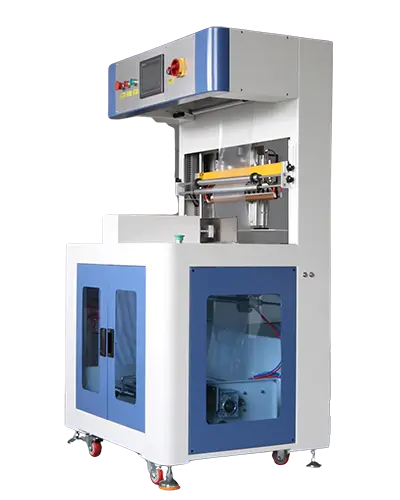
A semi-automatic sleeve wrapper requires manual product loading while the sealing and shrinking process remains partially automated.
It is commonly used in flexible production environments where product sizes or bundle formats frequently change.
For example, machines like the TY-P500 semi automatic sleeve wrapper are often used by contract packers, small beverage factories, and promotional packaging operations.
Fully Automatic Sleeve Wrapper
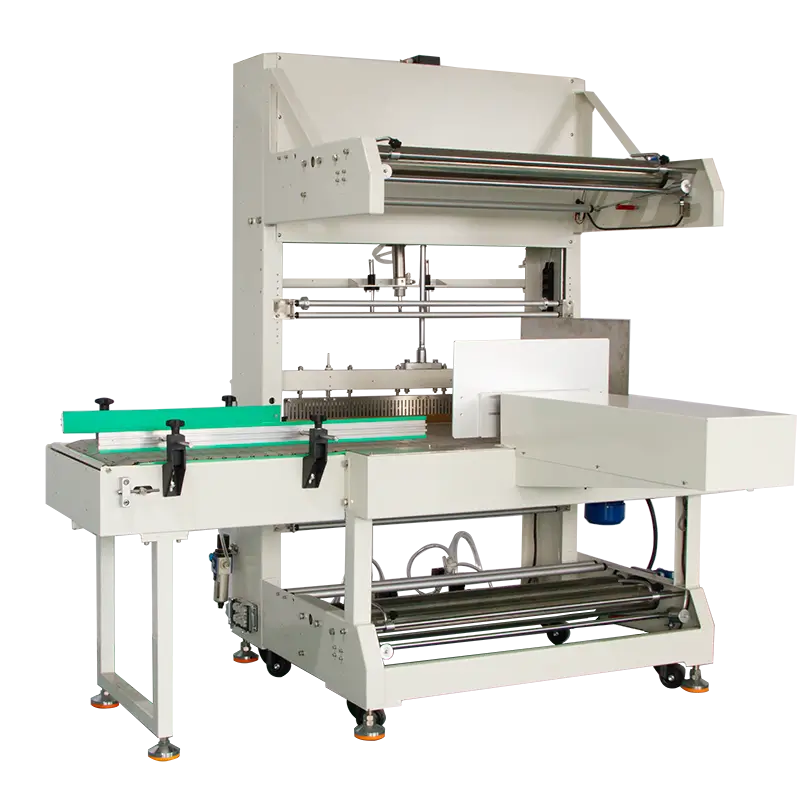
A fully automatic sleeve wrapper automatically handles product feeding, grouping, sealing, and film wrapping.
These systems are designed for continuous industrial production lines that require stable output and reduced labor dependency.
Machines such as the TY-800A automatic sleeve wrapper are commonly integrated into beverage, bottled water, and FMCG packaging lines.
Key Operational Differences
1. Production Scale
Semi automatic sleeve wrapper: Suitable for low to medium production environments with frequent product changes.
Automatic sleeve wrapper: Designed for continuous, high-volume packaging lines with standardized products.
2. Product Variety and Size
Semi-Automatic: With adjustable film width and a Collating Pusher Plate, it easily handles various product dimensions and shapes.
Fully Automatic: Best for uniform product sizes. Fully automatic systems are more efficient when product dimensions remain consistent across long production runs.
3. Important Technical Features to Consider
- Automatic grouping systems for stable multipack formation
- Photoelectric sensors and PLC control for accurate sealing and positioning
- Servo-driven systems for higher precision and stable continuous production
- Safety compliance for long-term industrial operation
4. Space and Integration
Your layout and available floor space will determine which sleeve wrapper best suits you.
Semi-automatic sleeve wrapper: It is compact, mobile and suitable for manual adjustments or operations involving various sizes of products.
Automatic sleeve wrapper: It takes a little more space but fits well with conveyors, shrink tunnels and other packaging machines to create a continuous process.
5. Labor and Cost Efficiency
Semi-Automatic: Less initial investment, but more labor requirements. Usually requires at least one operator for product feeding and film replacement.
Fully Automatic: Higher investment due to conveyors and grouping systems but saves labor long-term. Only film feeding (loading shrink film rolls) is needed.
Film Selection
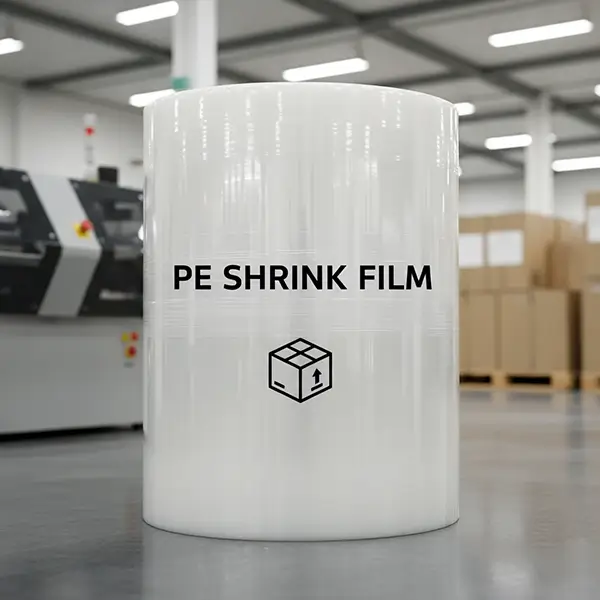
Both semi and fully automatic sleeve wrappers can use PE shrink film (for heavier products over 2kg) and PVC film (for smaller consumer goods around 500-1000g).
POF film is not recommended; it generally performs poorly in sleeve wrapping applications.
Application Scenarios
Beverage Industry
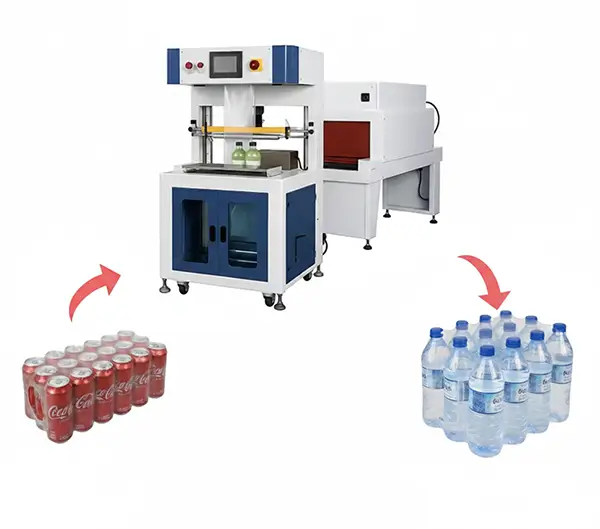
Fully automatic sleeve wrappers are commonly used for bottled water, soft drinks, and beverage multipacks that require continuous high-speed packaging.
Semi-automatic systems are more suitable for promotional bundles, short production runs, or mixed product packaging.
Logistics & Warehousing
Sleeve wrapping systems are also used to bundle cartons and warehouse products for easier transport, palletizing, and handling.
Recommended Machine Configurations
For Small Batch Production
TY-P500 Semi Automatic Sleeve Wrapper
For Mid-Speed Beverage Lines
TY-800A Automatic Sleeve Wrapper
For High-Speed Inline Packaging
DLL-450A High-Speed Sleeve Wrapper
Conclusion
The right sleeve wrapping system depends on your production speed, packaging flexibility, labor availability, and long-term operating goals.
Semi-automatic sleeve wrappers are better for flexible and lower-volume production, while fully automatic systems are designed for stable, high-volume industrial packaging lines.
If you are planning a new packaging line or upgrading an existing system, for detailed machine specifications and production capacities, explore our complete range of sleeve wrapping machines.