
When optimizing your production line, how to choose sleeve wrapping machine becomes a key step.
Whether it’s wrapping of bottled water, boxed food, or even bundled logistics items, the correct sleeve bundler selection will directly impact efficiency, product quality, and cost-efficiency.
This guide will take you through the major considerations that you will have to make before purchasing a sleeve wrapping machine. This will help you make a sound investment that future-proofs your factory.
1. Understanding the Function of a Sleeve Wrapper
A sleeve wrapper (also known as a shrink bundling system) involves the wrapping of several products with a PE film sleeve wrapping or PVC shrink film.
Once sealed, both ends remain open, forming a “bullseye”.
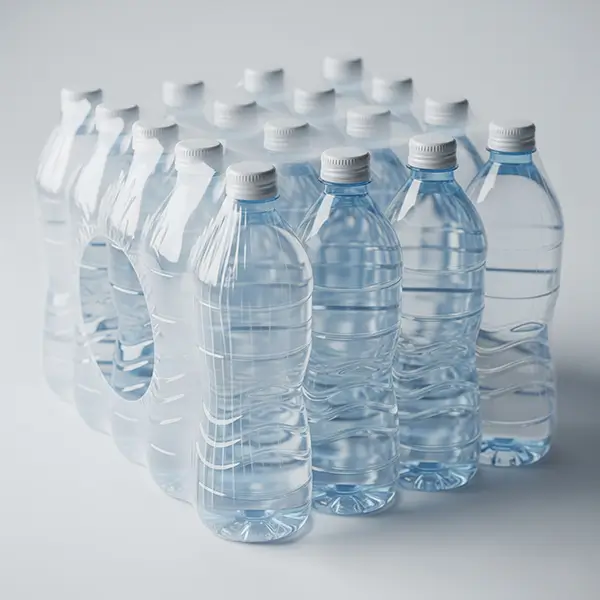
After that, the package is transferred to a heat-shrink tunnel, where the film is tightly pressed around the product to create a strong transport-resistant wrap.
Common Applications:
- Bottled drinks and cans
- Cartons or boxed products
- Goods of large size or of irregular shape
- Warehouse and logistics bundling
2. Evaluate Your Production Capacity
Identify your output needs before investing. Various models are suitable for different production scales:
| Type | Speed | Ideal Use | Example Models |
| Semi-Automatic Sleeve Wrapper | 8–10 packs/min | Small batches or startups | TY-P500 |
| Fully Automatic Sleeve Wrapper | 5–20 bundles/min | Mid-to-large beverage or logistics plants | TY-800A / DLL-450A |
| High-Speed Bundler Line | 20+ packs/min | Continuous high-volume lines of beverage | DLL-450A + Heat Tunnel |
Tip: To ensure future scalability, select PLC-controlled models that support modular upgrades.
Tengyi automatic sleeve wrappers can be easily combined with conveyors and case sealers to create a full-line automated process, helping you select the right sleeve wrapper for your operation.
3. Choose the Right Film Type
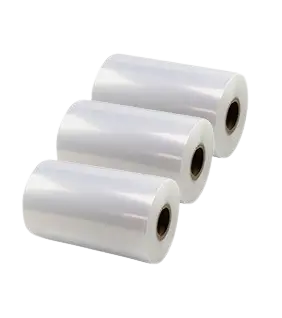
The choice of the film has a direct influence on the quality of seals, transparency and stability of the shrink.
| Film Type | Features | Typical Use | Shrink Temp (°C) |
| PE (Polyethylene) | Strong, economical, sturdy | Bottled beverages, heavy cartons | 150–170 |
| PVC (Polyvinyl Chloride) | Good flexibility, high clarity | Retail multi-packs | 130–140 |
Select the appropriate film thickness and temperature to prevent excessive shrinkage or loose seals.
For PE film sleeve wrapping consider:
- Under 4kg → 40–50 microns
- Over 10kg → 70–100 microns
For PVC: usually 30–40 microns for sleeve wrapping.
4. Evaluate Automation Level
Automation does not impact only labor costs but also consistency and uptime; an important consideration during sleeve bundler selection.
| Level | Description | Advantages |
| Semi-Automatic | Manual product loading | Low cost, flexible towards mixed products |
| Fully Automatic | Auto feeding and grouping | Uniform packaging, less labor |
| Fully Automatic + Grouping System | Auto feeding, counting, grouping, sealing and shrinking | Best for beverage plants |
When your line operates 24/7, a fully automatic sleeve wrapper, including grouping, is the most cost-effective and long-term option. It is usually considered the best sleeve wrapper for an industrial application.
5. Consider Product Size and Arrangement
The frame of the machine and the width of the film roll depend on the size, shape, and layout of the product.
(At Tengyi, we estimate film width as Product Length + (2/3 × Product Height).)
1. Push-type semi-auto: Manual arrangement is needed for bottles and cans.
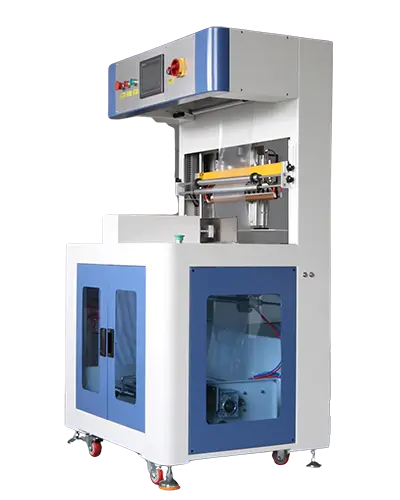
2. Inline conveyor type: For foam boxes or cartons that do not require any alignment.
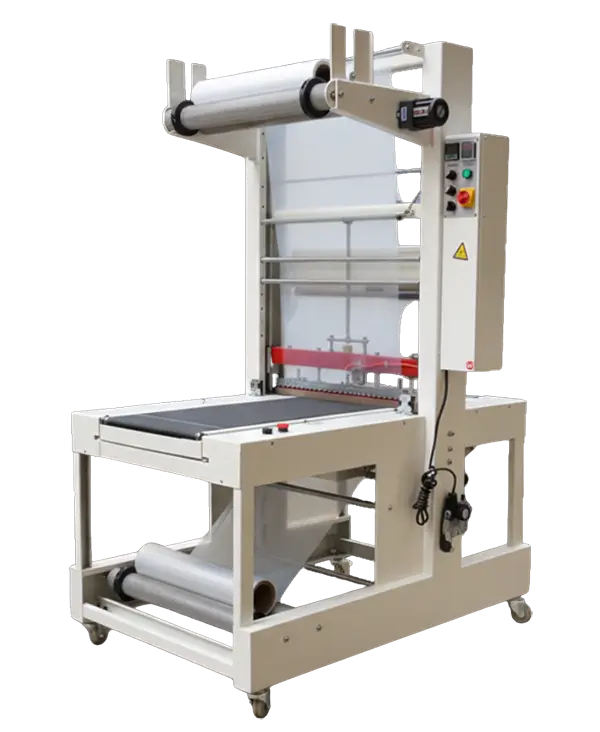
3. Side-push automatic type: For bottles/cans that require an automatic grouping.
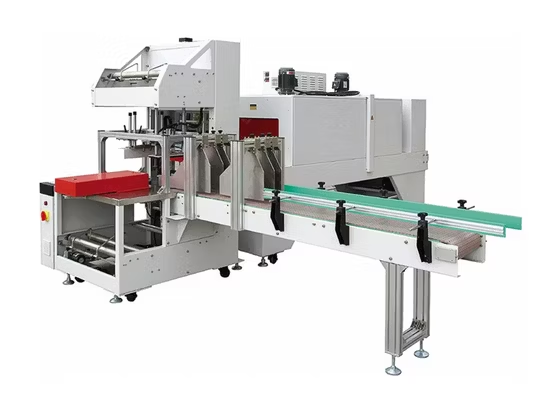
Tengyi provides a sealing blade width of 400mm to 1000mm, and customized frame sizes to meet various requirements of the shrink bundling system.
6. Plan for Line Integration
In case your sleeve wrapper is going to be included in a complete packaging system, compatibility is a must. It must integrate with:
- Case sealer: feeds cartons into the sleeve wrapper.
- Heat shrink tunnel e.g., TY-4525 model
- Labeling machine
- Automatic palletizers
For PE film shrink tunnels:
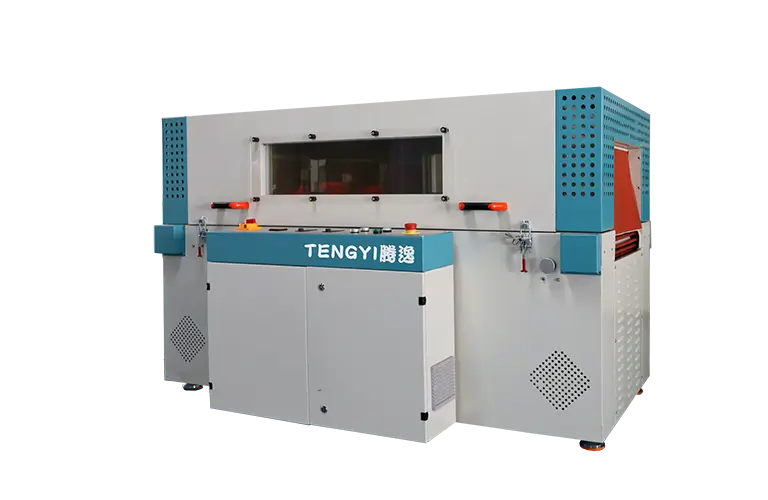
- Power: 18–30KW
- Temperature: 160-200 °C (can be adjusted, depending on the film thickness, the speed of the conveyor, the airflow and the heat-sensitivity of the products)
Under the PLC control strategy, the sleeve wrappers will be matched with the upstream and downstream machines, ensuring well-coordinated machine operation in your shrink bundling system.
7. Maintenance and After-Sales Support
Choosing the right supplier is as important as selecting the machine itself. A trusted supplier must provide:
- On-site or remote technical support
- Genuine spare parts
- Operator training and maintenance guidance
- Long-term after-sales service
Tengyi provides lifetime technical consultation to ensure your sleeve bundler runs efficiently for years, making it the best sleeve wrapper investment for long-term productivity.
8. Cost vs. Value: Focus on Long-Term ROI
Automation costs more upfront but pays off faster.
- Semi-auto → needs 2 operators
- Fully auto → needs only 1 monitor
In one year, the labor savings alone offset the price difference. Add in lower film waste, and ROI becomes even faster.
“A good sleeve wrapper isn’t a cost: it’s your long-term production engine.”
Conclusion
Choosing the right sleeve wrapper isn’t just about buying a machine: it’s about building a complete shrink bundling system aligned with your production goals.
Core principles:
- Speed / Output / Service
- Fully Automatic: Stable, time-saving and highest ROI in the long run
- Semi-Automatic: Flexible, cost-effective and suitable for small multi-product batches.
By analyzing product type, capacity, film type, automation level, and integration requirements, you will learn to select a sleeve wrapping machine effectively.
You can get the most efficient, economical, and scalable packing solution with smart sleeve bundler selection.
Ready to optimize your packaging line?
Contact Tengyi Machinery today for a tailored PE film sleeve wrapping solution.
